

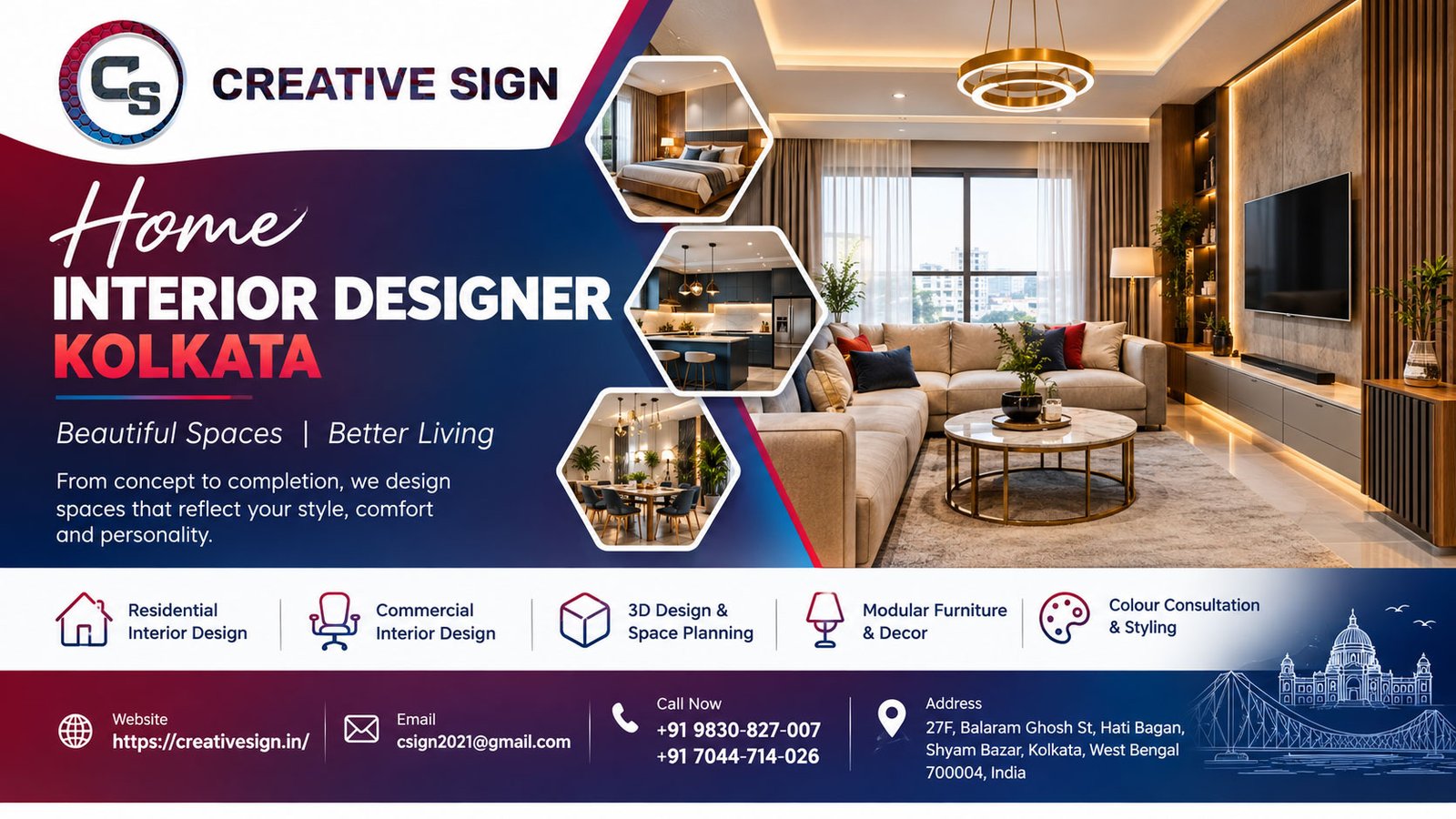
Designing a home in Kolkata is not simply about choosing attractive furniture, colours, or decorative finishes. A successful home needs to work with the way you actually live. Whether you are renovating an old apartment in North Kolkata, furnishing a new flat in New Town, or redesigning a family home around Ballygunge or Salt Lake, the right design decisions can make a significant difference to comfort, storage, movement, lighting, and long-term usability.
That is why How to Choose the Right Home Interior Designer Kolkata is an important question for homeowners before starting a project. The designer you select will influence much more than the appearance of your rooms. They may be involved in planning layouts, selecting materials, coordinating carpentry, resolving site limitations, managing design revisions, and helping you balance your budget with your expectations.
The goal should not be to find someone who simply produces beautiful images. You need a professional who understands your lifestyle, the practical realities of Kolkata homes, your budget, and the level of involvement you expect throughout the project.
One of the most common mistakes homeowners make is beginning with photographs of attractive interiors and trying to reproduce them exactly.
In practice, a design that looks excellent in a photograph may not work in your home.
For example, an open shelving concept may look elegant in a magazine, but a household with children may need enclosed storage. A large kitchen island might appear luxurious, but it can reduce comfortable movement in a compact apartment. Similarly, a light-coloured sofa may look sophisticated but may require more maintenance in a busy household.
Before speaking with a designer, make a simple list of your requirements:
These answers give a designer useful information before any drawings are prepared.
Homes in Kolkata can have very different characteristics depending on the building, neighbourhood, age, and apartment layout. Some properties have compact rooms, unusual columns, limited natural light, narrow balconies, or structural elements that cannot simply be removed.
An experienced professional should identify these conditions during the initial discussion or site assessment.
Rather than forcing a particular design style into the property, the designer should adapt the concept to the actual space.
Choosing a designer should involve more than looking at an Instagram profile or portfolio.
A portfolio is useful, but it does not tell you everything about how a professional works.
Look for evidence of practical experience across different types of spaces. If every portfolio image appears to show large luxury apartments, ask how the designer approaches smaller homes and tighter budgets.
Ask to see projects similar to yours.
For example, if you own a two-bedroom apartment, look for previous two-bedroom residential projects rather than judging the designer exclusively by large villas.
Pay attention to:
A good portfolio should demonstrate problem-solving, not merely decoration.
A professional should be able to explain the project process clearly.
Depending on the scope, it may include:
The exact process will vary, but unclear responsibilities can create confusion later.
Budget conversations should happen before extensive design work begins.
Instead of giving only a total figure, discuss how much you are comfortable allocating to major categories such as:
An experienced designer should also explain where spending more may provide genuine practical value and where economical alternatives can work.
Two designs can look almost identical while having very different long-term performance.
Ask about the materials being proposed and why they are suitable.
For kitchens and wardrobes, for example, the discussion may involve board types, laminates, acrylic finishes, hinges, drawer channels, handles, internal storage systems, and moisture considerations.
You do not need to become a materials expert, but you should understand what you are paying for.
The kitchen is one of the areas where design decisions have an immediate impact on everyday life.
A visually impressive kitchen can still be inconvenient if the refrigerator, sink, hob, preparation area, and storage are poorly positioned.
A useful kitchen plan considers the sequence of everyday activities.
For example, groceries may move from the entrance to the refrigerator, then to preparation space, cooking, serving, and cleaning. The layout should support these movements without unnecessary crossing.
In compact Kolkata apartments, storage can become one of the biggest design challenges.
Useful solutions can include:
The right combination depends on the household. A family that cooks extensively may need very different storage from someone who orders food regularly.
The living room is often the first space guests notice, but it is also a working part of the home.
A practical living room should consider seating, television viewing, circulation, lighting, storage, and access to balconies or other rooms.
Avoid filling every available wall or corner with furniture simply because the room feels empty.
Negative space is useful.
A well-planned room allows people to move comfortably without repeatedly walking around furniture.
One ceiling light rarely creates the best atmosphere.
Consider three broad types of lighting:
Ambient lighting: Provides general illumination.
Task lighting: Supports specific activities such as reading or working.
Accent lighting: Highlights artwork, architectural features, shelving, or decorative elements.
The combination can make the same room feel different during daytime, evening, and entertaining.
Bedrooms should not be treated as display rooms.
The bed position, wardrobe access, bedside storage, lighting, ventilation, and movement around the furniture all influence everyday comfort.
One practical mistake is installing wardrobes with doors that interfere with beds or room entrances.
Sliding systems may sometimes work better in restricted spaces, while hinged shutters can provide other advantages depending on the layout and hardware.
A wardrobe should reflect the owner’s habits.
Someone who wears formal clothing regularly may require more hanging space. Another person may need additional drawers, shelves, or luggage storage.
Before finalising internal wardrobe divisions, make an inventory of what you actually own.
This simple step can prevent the common problem of having a large wardrobe that still feels poorly organised.
Before signing an agreement, ask practical questions rather than relying only on general assurances.
Useful questions include:
The answers can reveal how organised the process is.
A designer who communicates clearly about limitations, costs, timelines, and responsibilities is easier to work with than someone who promises that everything will be effortless.
The lowest initial quotation does not necessarily represent the lowest overall cost.
A cheaper proposal may exclude important elements or use different material specifications. Always compare quotations on a like-for-like basis.
Reference images are useful for communicating style, but they should be treated as inspiration rather than construction instructions.
Your room dimensions, windows, electrical points, storage requirements, budget, and lifestyle may be completely different.
Late changes can affect materials, measurements, drawings, and execution.
Try to finalise important decisions before production begins.
Glossy surfaces, open shelves, intricate decorative features, and certain light finishes can require more cleaning.
A good home is not just attractive on the day it is completed. It should remain manageable after months and years of normal use.
Separate your requirements into three categories:
Must have: Essential features that cannot be compromised.
Should have: Important improvements that fit the budget.
Nice to have: Decorative or optional additions.
This makes budget discussions considerably easier.
Renovation projects can uncover unexpected conditions, particularly in older properties.
Hidden electrical issues, plumbing changes, damaged surfaces, or measurement adjustments can sometimes require additional work.
Keeping a reasonable contingency helps prevent one unexpected expense from disrupting the entire project.
Important decisions should not depend entirely on verbal conversations.
Keep records of:
Good documentation protects both the homeowner and the professional.
Photographs can hide details that become obvious in person.
If practical, seeing a completed project can help you evaluate finishing quality, storage functionality, material combinations, and how the design looks outside professional photography.
For homeowners researching Home Interior Designers in Kolkata, the most useful starting point is a conversation about the actual home rather than a generic design package.
Creative Sign can be contacted to discuss residential interior requirements, design expectations, and practical considerations for homes in Kolkata. The objective should always be to understand the property, lifestyle, functional requirements, preferred aesthetic, and budget before deciding on a direction.
The same principle applies whether you are planning a complete renovation or improving only selected areas such as a kitchen, living room, bedroom, wardrobes, or storage.
For local homeowners, Creative Sign is based at 27F, Balaram Ghosh St, Hati Bagan, Shyam Bazar, Kolkata, West Bengal 700004, India. You can also review the business website and discuss your specific requirements before proceeding.
Start with your lifestyle, room requirements, approximate budget, preferred design style, storage needs, timeline, and any existing furniture you want to retain. It is also useful to explain problems with your current home, such as insufficient storage, poor lighting, awkward circulation, or an inefficient kitchen.
The first meeting should help both sides determine whether the project requirements are realistic and clearly understood.
A portfolio is important, but look beyond attractive photographs. Examine whether previous projects demonstrate practical planning, material knowledge, storage solutions, lighting, and attention to finishing details.
Also try to find projects that resemble your property in size and complexity. A designer who has successfully worked with compact apartments may approach space differently from someone who primarily works on large homes.
Begin with a realistic budget and clearly define what is included.
Ask for material specifications and understand whether appliances, lighting, hardware, installation, electrical modifications, painting, and other supporting work are included.
Most importantly, document changes. Repeated design modifications during execution can increase both material and labour costs.
Trends can provide inspiration, but permanent elements should generally be selected for longevity.
For example, a fashionable colour can easily be changed through accessories or paint, while kitchen layouts, wardrobes, flooring, and built-in furniture are more difficult and expensive to replace.
A useful approach is to combine timeless functional decisions with smaller trend-based decorative elements.
A successful residential interior should look good, function naturally, suit the occupants, use space efficiently, and remain practical to maintain.
The best result is not necessarily the most expensive or visually elaborate one. It is the home where storage is convenient, movement feels natural, lighting works for different activities, materials suit everyday use, and the overall design reflects the people living there.
Choosing an interior professional is ultimately a decision about how you want your home to function for years after the project is finished. The right process starts with understanding your lifestyle, evaluating relevant experience, discussing materials and budget openly, checking the practical details, and documenting important decisions.
For anyone comparing options for a Residential Interior Designer Kolkata, the most useful question is not simply, “Who can make my home look beautiful?” It is, “Who can understand my requirements and turn them into a practical, durable, and comfortable home?”
That mindset can help you approach Home Interior Designer Kolkata selection with greater clarity and fewer surprises. If you are planning a residential project in Kolkata, you can discuss your requirements with Creative Sign at +91 9830-827-007 or +91 7044-714-026, or visit https://creativesign.in/ to learn more before taking the next step.